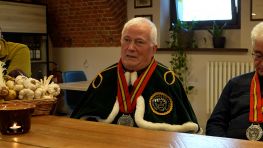



 Giuseppe Girino
 Renato Gallesio
Renato Gallesio’s hazelnut oil: bridging historical heritage and sensory innovation
Renato Gallesio’s hazelnut oil production stands as an exemplary case study within the landscape of niche agri-food processing. Inspired by historical post-WWII dietary traditions, Gallesio has developed an extraction protocol that merges artisanal mechanical engineering with a rigorous respect for the organoleptic properties of the raw material: the Piedmontese Tonda Gentile Trilobata hazelnut.
The production process is characterized by a radically artisanal and slow approach: from wood-fired roasting to cold hydraulic extraction designed to prevent oxidation, and maturation through natural decantation in stainless steel tanks.
The resulting oil serves as a premium finishing condiment, boasting a nutritional profile rich in unsaturated fats. Its exceptional quality was internationally recognized in 2017 with the Gourmet d'Or in Paris (AVPA), an award attesting its sensory superiority over comparable productions.
Committed to a circular economy model, the Gallesio is expanding its research toward the valorization of by-products within the functional cosmetics sector, leveraging the biologically documented emollient and regenerative properties of the hazelnut.
Video table of contents
Interview information
Country: IT
Region: Piemonte
City: Vaglio Serra Monferrato
Locality: Camurata
Renato Gallesio
Date of birth: 07-02-1969
City: Nizza Monferrato
Profession: Farmer
Languages: Italiano
Document by: Laura Bugliazzini
Video by: Andrea Icardi, Laura Bugliazzini
Created: 30-01-2026
Questo video fa parte del seguente archivio
Nourishing Piedmontese Identity: Bagna Cauda’s tales
Nourishing Piedmontese Identity: Bagna Cauda’s tales
Bagna cauda is a complex and multifaceted gastronomic system partly constituted by its ingredients and, above all, by a repertoire of cultural aspects capable of conveying symbols, traditions, and knowledge of the communities of Southern Piedmont, from which it is considered an identity food.
A dish in which every variant of the recipe is evidence of a different tradition: hundreds of possible preparations that differ from each other, connected by distinctive traits such as conviviality, sharing, irony, and the celebration of a non-solemn festive event. A unique convergence that represents the common thread of this repository that contains interviews with farmers, cooks, and those who experience the practice of bagna cauda as a moment of communion with food and collectivity.
A meaning that, in the last twelve years, the Astigiani Cultural Association has been able to grasp, proposing to the Piedmontese communities all over the world the participation to the Bagna Cauda Day. A very successful initiative that involved over 30.000 diners in the 2024 edition.