
 Rosalia Vacca and the Dream of…
 Alessandro Putzu
My Dora: Alessandro Putzu and Life Along the Depretis Canal
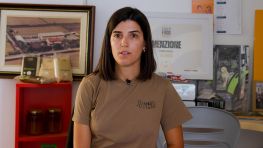
Alessandro Putzu, originally from Sorgono, Sardinia, moved to Piedmont in 2007 to work in his brother's construction company. His interest in nature and agriculture soon led him to collaborate with local irrigation consortia. After some seasonal experience in canal maintenance, in 2018 he joined Coutenza Canali Cavour, where he began managing the irrigation network.
After an initial period in maintenance, in 2021 he took over management of the Depretis Canal, overseeing the opening, regulation, and maintenance of the entrance, the secondary network, and related systems, such as the nearby hydraulic lift. His work covers a long stretch of the Naviglio di Ivrea canal all the way to Livorno Ferraris, with responsibilities ranging from water flow control to emergency management, from liaising with farmers to protecting wildlife.
Putzu describes his profession as deeply rooted in nature, yet highly technical: water measurement is based on mathematical models, but is often refined with experience, to the point of developing a true "sixth sense" for predicting changes in flow following storms or floods.
Although he can't swim due to a childhood trauma, Alessandro has a strong personal connection to water and considers it an essential part of his life. He is dedicated to his profession, caring for the ancient Depretis toll gate as if it were his own home, and is personally involved in managing emergencies, from floods to animal rescues.
Finally, he emphasizes the human value of teamwork and solidarity among colleagues. For him, the water network is also a network of relationships and responsibilities, where humans must coexist with and not challenge nature, learning to respect and manage it intelligently.
Video table of contents
- From central Sardinia to Piedmont with my brother, a bricklayer: the search for a job in contact with nature.
- Since 2018 in Coutenza Canale Cavour, the beginnings as a seasonal then at Depretis
- Nothing is ever the same: the year of drought I learned everything
- My work area, from Moncrivello to Gerbido on the Ivrea canal
- The Depretis Canal and its entrance
- The hydraulic elevator and the Canale del Rotto
- Management of irrigation "nozzles"
- Measuring water, how I learned
- I can't swim, but I can't stay away from the water. My Dora.
- I talk to water
- Once I've done my part, we're in God's hands! The forces of nature cannot be stopped.
- The "sixth sense" for water
- The colors of the water: the red water of the Chiusella and the mint water of the Dora
- We're often alone. Being alone with my Dora
- I feel fulfilled because I contribute to nature. Minimum vital flow and agriculture. Two elements that must be balanced.
- Take care of artifacts that have a history
- My first day alone. I've achieved everything in life, the fulfillment of a dream.
- When working with water there are no timetables
- Those above must warn those below. We are all connected.
Interview information
Country: IT
Region: Piemonte
City: Villareggia
Urls: Canale Depretis
Alessandro Putzu
Date of birth: 12-18-1988
City: Sorgono
Profession: Other
Languages: italiano
Document by: Luca Ghiardo
Video by: Luca Ghiardo, Davide Porporato
Created: 03-04-2025
Questo video fa parte del seguente archivio
Rice stories
Rice stories
Food is a fundamental resource for man and his health, both through the supply of nutrients and the ability to embody traits of human culture that play a leading role in our well-being.
Over time, each territory has built original ways in which to relate to the fruits of its land, enriching them with rituals, symbolic meanings and culinary customs. Much of these relationships have been lost following the years of the economic boom, with the exodus from the countryside to urban centers, with the advent of agriculture for mass production and ultimately with the globalization of markets and the consequent impoverishment of the heritage of biodiversity and ethnodiversity.
The purpose of this archive is to collect evidence relating to the main rice production area in Europe, that is the Po Valley, and to investigate, through the analysis of textual sources and testimonies collected in the field, both what survives of this heritage, and the ways in which which has evolved and reached us, paying particular attention to the explicit and implicit links that bind food and health.