


 Rosalia Vacca and the Dream of…
 Omar Corradino
The responsibility of managing water
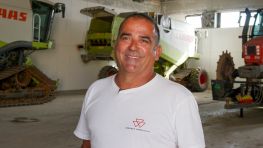
Omar Corradino, born in 1979, has been working for the Consorzio Ovest Sesia since 2012. He started as a laborer and is now the foreman for the San Germano and Olcenengo areas, also managing two hydroelectric plants in the Santhià area. He coordinates a team of seven people who are responsible for canal maintenance, grass cutting, cleaning, and emergency response.
The work requires great attention to land safety, especially in the event of storms or drought. Their activities take place year-round, with winter canal preparation and an irrigation season that runs from March to September. Omar emphasizes the importance of prevention, constant vigilance, and teamwork.
He learned his trade through experience and from his older colleagues. Over time, he has developed a true "sixth sense" for recognizing when and where a problem might arise. The relationship with farmers is crucial: conflicts must be managed, water distributed equitably, and constant dialogue maintained.
Omar highlights the challenges associated with climate change, which makes irrigation different every year: there are periods of abundance and others of scarcity. For this reason, the irrigation network has been adapted, in many cases switching to dry sowing. Difficulties are also increasing due to canal pollution and the presence of coypu, which damage the banks.
He also emphasizes the beauty of the human connection within the team and with the local area. At the end of the irrigation season, moments of sharing are organized with farmers, demonstrating the social importance of their work. For Omar, water management is a mission based on responsibility, passion, and belonging to the local area.
Video table of contents
- Learning the trade, the difficulties of irrigation
- Climate change, the dangers of water scarcity and oversupply, talking to farmers
- The water doesn't stop, we do everything we can to safeguard the territory
- We keep the canals efficient: today they carry much more water than they once did.
- Working together, building community
- Working year: winter, irrigated
- The irrigation period, enter the data
- Conflict Management: The Importance of Communication
- Water rights
- The spring waters
- East Sesia, West Sesia and Coutenza
- Cavour and Dora Canals: waters that mix
- Water quality, garbage in the canals
- With Covid, we've seen animals we haven't seen for a long time again: badgers, foxes...
- District Lunches
- In dialect, the water carrier is called "pradareu"
Interview information
Country: IT
Region: Piemonte
City: San Germano Vercellese
Omar Corradino
Date of birth: 02-05-1979
City: Vercelli
School: High school or Secondary
Profession: Other
Languages: italiano
Document by: Luca Ghiardo
Video by: Luca Ghiardo, Davide Porporato
Created: 01-04-2025
Questo video fa parte del seguente archivio
Rice stories
Rice stories
Food is a fundamental resource for man and his health, both through the supply of nutrients and the ability to embody traits of human culture that play a leading role in our well-being.
Over time, each territory has built original ways in which to relate to the fruits of its land, enriching them with rituals, symbolic meanings and culinary customs. Much of these relationships have been lost following the years of the economic boom, with the exodus from the countryside to urban centers, with the advent of agriculture for mass production and ultimately with the globalization of markets and the consequent impoverishment of the heritage of biodiversity and ethnodiversity.
The purpose of this archive is to collect evidence relating to the main rice production area in Europe, that is the Po Valley, and to investigate, through the analysis of textual sources and testimonies collected in the field, both what survives of this heritage, and the ways in which which has evolved and reached us, paying particular attention to the explicit and implicit links that bind food and health.