


 Rosalia Vacca and the Dream of…
 Roberto Molinaro
Sixty Years on the Marcova in Stroppiana
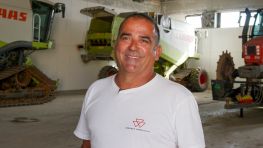
Roberto Molinaro, born in 1955, lived for over sixty years at the Stroppiana toll booth, next to the Marcova canal, in a house intended for employees of the West Sesia Irrigation Association. He began working as a casual laborer, following in the footsteps of his father, who also worked for the organization. After his father's death, Roberto was able to take over his role, thanks to the company's support.
His job involved maintaining canals, managing flood gates, and controlling water flow. It wasn't all easy at first, but with time, experience, and the help of his colleagues, he learned to manage everything with confidence. He always appreciated the proximity of water, which for him represented an inner balance.
Roberto recounts that he enjoyed a good level of autonomy at work, with good relationships with both superiors and farmers. Managing floods was challenging, but he faced emergencies with clarity of mind. Before automation, the work was very physical, but over time, new systems have made control simpler and safer.
He also discusses the presence of coypu, which damage the banks, and the return of certain bird species thanks to the vegetation he has planted and grown over the years between his Stroppiana toll booth and his Marcova. He concludes by recalling how the agricultural landscape has changed over time, especially with the mechanization of canal maintenance and the arrival of waste separation, which has made the waterways cleaner.
Video table of contents
- Presentation
- His father's death and the beginning of his career as a water carrier
- Learning the trade
- A life on the Marcova stream
- I need to live near flowing water
- The beauty of working independently
- Floods and their management
- Motorized and automated barriers: thank goodness they exist!
- The alarm systems of the past and the automations of today
- The coypu, arrived thirty years ago
- Plants along the canals and maintenance using machinery
- Today the canals are much cleaner than they once were thanks to separate waste collection.
Interview information
Country: IT
Region: Piemonte
City: Stroppiana
Roberto Molinaro
Date of birth: 11-13-1955
City: Stroppiana
School: High school or Secondary
Profession: Other
Languages: italiano
Document by: Luca Ghiardo
Video by: Luca Ghiardo, Davide Porporato
Created: 31-03-2025
Questo video fa parte del seguente archivio
Rice stories
Rice stories
Food is a fundamental resource for man and his health, both through the supply of nutrients and the ability to embody traits of human culture that play a leading role in our well-being.
Over time, each territory has built original ways in which to relate to the fruits of its land, enriching them with rituals, symbolic meanings and culinary customs. Much of these relationships have been lost following the years of the economic boom, with the exodus from the countryside to urban centers, with the advent of agriculture for mass production and ultimately with the globalization of markets and the consequent impoverishment of the heritage of biodiversity and ethnodiversity.
The purpose of this archive is to collect evidence relating to the main rice production area in Europe, that is the Po Valley, and to investigate, through the analysis of textual sources and testimonies collected in the field, both what survives of this heritage, and the ways in which which has evolved and reached us, paying particular attention to the explicit and implicit links that bind food and health.